Neulasta® (pegfilgrastim) Onpro® helps you fight the risk of infection from home and reduces your risk of being hospitalized1,*

  • If, for any reason, you believe you did not receive your full dose of Neulasta® or that your on-body injector is not working correctly, immediately contact your healthcare provider, as an incomplete dose could increase infection risk.2

What is febrile neutropenia (FN)?

Chemotherapy works by killing fast-growing cancer cells. One of the side effects of chemotherapy is that it can decrease the number of white blood cells in your body. Having a low white blood cell count can weaken your immune system, which increases your risk of infection.3,4


A low white blood cell count is called neutropenia. When combined with a fever, it’s called febrile neutropenia—and it may be a sign that you have an infection, which is one of the most serious side effects of strong chemotherapy.3,4

Reducing your risk of infection3

Pegfilgrastim is a common white blood cell booster, or a granulocyte colony-stimulating factor (GCSF), which is prescribed to prevent febrile neutropenia (FN). Neulasta® is the #1 prescribed brand of pegfilgrastim.* Neulasta® offers Neulasta® Onpro®, the first on-body injector designed to automatically deliver your Neulasta® at the right time on the day after chemotherapy.3,†

* Current as of April 2026.4
 If, for any reason, you believe that you did not receive your full dose of Neulasta® or that your on-body injector is not working correctly, immediately contact your healthcare provider, as an incomplete dose could increase infection risk.2

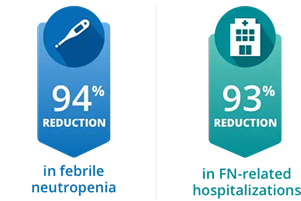
Next-day Neulasta® reduced the incidence of FN by 94% and reduced FN‑related hospitalizations by 93%3

A study of 928 patients with breast cancer showed that when given once every chemotherapy cycle, Neulasta® helped protect against the risk of infection and reduced hospitalizations. 17% of patients got infections when not treated with Neulasta®—while only 1% of patients got infections when treated with Neulasta®, a 94% reduction. 14% of patients were hospitalized when not treated with Neulasta®—while only 1% of patients treated with Neulasta® were hospitalized, a 93% reduction.3

Side effects


The most common side effect of Neulasta® is aching bones or pain in your arms and legs. If you experience this or any other side effect, talk to your doctor.2

If, for any reason, you believe you did not receive your full dose of Neulasta® or that your on-body injector is not working correctly, immediately contact your healthcare provider, as an incomplete dose could increase infection risk.2

G-CSF = granulocyte colony-stimulating factor.

1.8 Million Patients icon

~1.8 million patients have used Neulasta® Onpro®3

Stay at home with Neulasta® Onpro®


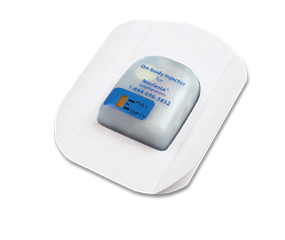
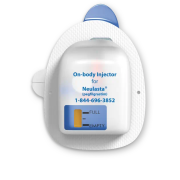
Neulasta® Onpro® is an on-body injector designed to automatically deliver Neulasta® at the right time on the day after chemotherapy, so you don't have to leave your home to go back to the doctor's office
2,*
  • If, for any reason, you believe you did not receive your full dose of Neulasta® or that your on-body injector is not working correctly, immediately contact your healthcare provider, as an incomplete dose could increase infection risk.
Watch this overview video to learn more about how your healthcare provider will apply the Neulasta® Onpro® on-body injector, how it is removed, and what to expect the next day.

The information provided does not replace the Healthcare Provider Instructions for Use. This video does not replace the Instructions for Use. Please consult the Instructions for Use when using the Neulasta® Onpro® kit.

How the Neulasta® Onpro® on-body injector works2

  • Right after your chemo treatment, your healthcare provider will apply the on-body injector to your skin
  • The on-body injector is designed to automatically deliver the dose approximately 27 hours after application
  • Delivery takes about 45 minutes


After dose delivery is complete, the device can be removed and disposed of according to the Patient Instructions for Use.2,4

The black line should be at “FULL” until dose delivery starts. Check your instructions for use for more information.
The pad attaches the on-body injector directly on the skin on the back of your arm or abdomen.
Allows you to view the cannula (a short, soft tube) that your Neulasta® passes through during the 45-minute dose delivery.
When you hear a beep, check the status light and fill indicator. See your instructions for use to understand what these signals mean.

Flashing green: On-body injector is working properly.

Solid green (or turned off): Medication delivery should be complete. Check that the fill indicator reads “empty” and there is no noticeably wet adhesive.

Flashing red: On-body injector error—call your healthcare provider immediately.

An optional PodPal™ adhesive extender may be used for additional support if recommended by your healthcare provider.

A PodPal adds extra adhesion


For a more secure fit, an adhesive extender that fits around the on-body injector called a PodPal may be added by your doctor or nurse if they deem it appropriate. You can also ask your doctor or nurse about adding a PodPal when they put your Neulasta® Onpro® on-body injector in place.

We’re right here, right when you need us

Personalized patient support designed for you with financial support resources and 
other helpful patient support services, we are here to help you along the way.

Amgen® SupportPlus Co-Pay Program

If you have commercial or private insurance that you get from your employer or buy directly from a health insurance company, you may be eligible to pay as little as $0* for your prescription.

The Amgen® SupportPlus Co-Pay Program may help patients with commercial or private insurance lower their out-of-pocket costs

  • You may pay as little as $0* out-of-pocket per month for each dose
  • Can be applied to deductible, co-insurance, and co-payment*
  • No income eligibility requirement

*Eligibility criteria and program maximums apply. See AmgenSupportPlus.com/Copay for full Terms and Conditions.

Shield in hand logo

What if I don’t have private or commercial insurance (eg, self-purchased or through an employer)?

Amgen® SupportPlus can provide information about independent nonprofit foundations that may be able to help.


Call 866-264-2778 (Monday–Friday, 8:30 AM–8:00 PM ET) or visit AmgenSupportPlus.com.

Eligibility for resources provided by independent nonprofit patient assistance programs is based on the nonprofit’s criteria. Amgen has no control over these
programs and provides information as a courtesy only.

Connect with us live:

Call 866-264-2778 Monday through Friday, 8:30 AM to 8:00 PM ET

Downloadable Materials

Icon_DTC
Neulasta® Brochure

Get an overview of Neulasta® and the Neulasta® Onpro® kit

Icon_Resources
Doctor Discussion Guide

Get a printable guide to take to your next appointment.

Picture 2
Traveling With Neulasta® Onpro®?

Get a TSA card to show airport security.

TSA = Transportation Security Administration.

Picture 1
On-body Injector Instructions for Use
Neulasta® (pegfilgrastim) Onpro® Demonstration Kit for HCPs
Neulasta® Onpro® Kit Instructions for Use
Group 4
Prefilled Syringe Instructions for Use

Additional Patient Resources

icon_Sharps container
Injector Disposal Program

Patients can request a FREE sharps container for on-body injector disposal. For more information, call Amgen® SupportPlus at 1-866-264-2778 to receive a container in 7 to 10 business days.

icon_SharpsPhone
24/7 telephone support

Patients get 24/7 telephone support for questions about Neulasta® Onpro®. 1-844-MYNEULASTA
(1-844-696-3852)

Glossary of cancer terms

List
Absolute neutrophil count (ANC)

ANC refers to the total number of neutrophils present in the blood. Neutrophils are particularly important because they defend our bodies against certain types of infection.


Bacteria

Microscopic (can only be seen with a microscope) organisms (living things) that live in and around most living and nonliving things. Some types of bacteria help our bodies stay in balance, while other types can multiply within the body and cause infection. Bacteria are the most common causes of infections in people with cancer. Some examples of bacterial infection include food poisoning, pneumonia, and strep throat.


Chemotherapy (chemo)


Drugs to destroy cancer cells. A person on chemotherapy may take one drug or a combination of drugs. Most often these drugs are given by vein using intravenous (IV) infusion. Some can be taken by mouth or given as an injection, among other methods of delivery.


Colony-stimulating factors


Also called CSFs, colony-stimulating factors are drugs that promote the production of various white blood cells. An example of a CSF is Neulasta® (pegfilgrastim).


Complete blood count (CBC)

The CBC is a test that determines the number of red blood cells, white blood cells, and platelets in the blood.


Febrile neutropenia (FN)

Having a low white blood cell count (neutropenia) and a fever (a neutropenic fever). FN is often a sign of a serious infection.


Infection


An invasion of microorganisms such as bacteria or viruses that have the ability to multiply and cause disease.


Lymphoma


Cancer that begins in cells of the lymphatic system (part of the immune system that produces and stores cells that fight infection and disease).


Myelosuppressive chemotherapy


Sometimes called strong chemotherapy, a type of chemotherapy that can lower the number of blood cells in your body. Often, people just use the word myelosuppressive to mean chemotherapy that lowers your number of white blood cells.


Neutropenia


A lower-than-normal number of neutrophils (infection-fighting white blood cells) in the blood. It is a common side effect of some chemotherapy treatments. Doctors check the number of neutrophils when they measure the white blood cell count, to monitor the risk of infection.


Neutropenic fever


Having a low white blood cell count with a fever may be a sign of serious infection.


Neutrophil

The most common type of white blood cell. Neutrophils help the body fight infection. A low white blood cell count usually indicates that the neutrophil count is low. It is easier to get an infection and harder to recover from an infection when the number of neutrophils in the bloodstream is low.


Neutrophil count


The number of a specific kind of infection-fighting white blood cells called neutrophils in the blood. A low white blood cell count usually indicates that the neutrophil count is low. It is easier to get an infection and harder to recover from an infection when the number of neutrophils in the bloodstream is low.


Placebo


A "dummy" treatment used in some clinical trials. In these studies, a group of patients who are given a placebo treatment are compared to another group of patients who are given the actual treatment. The difference in results between the actual treatment group and the placebo group are considered the result of giving the medicine.


Platelets


A type of cell made in the bone marrow. The main function of platelets is to aid in clotting the blood following an injury.


Side effect


Any undesired actions or effects of a drug or treatment. For example, common side effects of chemotherapy include fatigue, nausea, vomiting, and loss of appetite.


White blood cell (WBC)


A white blood cell is one of the three main types of blood cells. They are produced in the bone marrow and released into the blood. White blood cells are responsible for fighting infection. There are several kinds of white blood cells, including monocytes, lymphocytes, neutrophils, eosinophils, and basophils.

FAQ

About chemotherapy
What is chemotherapy?

Chemotherapy (chemo) is a type of treatment that includes a medication or combination of medications to treat cancer. The goal of chemo is to stop or slow the growth of cancer cells. Chemo is considered a systemic therapy. This means it may affect your entire body.

Chemo medications attack fast-growing cancer cells, but they can also affect healthy cells that grow rapidly. The effect of these medications on normal cells often causes chemo side effects. For example:


  • A number of blood cells that divide rapidly can be damaged along with cancer cells during chemo: 
    •  White blood cells help protect the body from infection. A low white blood cell count is known as neutropenia. If your white blood cell count gets too low, you could get an infection.
    • Red blood cells carry oxygen throughout your body. A low red blood cell count is known as anemia. Anemia can lead to fatigue, chest pain, and more serious complications.
    • Platelets are structures in the blood that help stop bleeding. A low platelet cell count is known as thrombocytopenia. A low platelet count can cause bruising and bleeding.
  • Hair follicles have cells that can be affected by chemo, leading to hair loss, also called alopecia.
  • Cells lining your stomach can also be affected by chemo. This can cause vomiting and diarrhea, and may be associated with nausea.

How does chemotherapy work?

The goal of chemotherapy (chemo) is to kill cancer cells or slow the growth of cancer over time. Chemo is often given several times over weeks or months in what is known as a course of treatment. A course of treatment is made up of a series of treatment periods, called cycles. During a cycle, you may get chemo every day for one or more days. Since chemo also kills normal cells, these chemo days are followed by periods of rest when you receive no treatment. This rest lets your body recover and produce new healthy cells.

 
What is a chemo regimen?

Your doctor will create a plan, or regimen, that includes the type of chemo medications you will receive. The regimen also includes the medication dose and how often you will receive it. Your doctor will choose certain medications that can best fight your cancer.

 
How is chemo given?

Chemotherapy (chemo) treatment plans may use a single medication or a combination (or "cocktail") of medications that can be delivered in more than one way. You may receive chemo in one or more of the following forms:
 

  • Injection. Types of injection include: 
    •  Subcutaneous (SQ): Chemo given as a shot just under the skin
    • Intramuscular (IM): Chemo given as a shot directly into a muscle
    • Intravenous (IV): Chemo given as a shot directly into a vein
  • IV infusion: Chemo medications are dripped through a tube that is attached to a needle and put into a vein
  • Oral: Chemo taken by mouth as a pill or liquid
  • Topical: A cream containing the chemo medication that is rubbed into the skin
  • Intra-arterial (IA): Chemo delivered into an artery that is connected to the tumor
  • Intraperitoneal (IP): Chemo given directly into the area that contains the intestines, stomach, liver, ovaries, etc. This area is called the peritoneal cavity.
 
What are the most common side effects of chemo?

Most people undergoing chemotherapy (chemo) will have chemo side effects. These can vary from person to person. Common chemo side effects include:


  • Hair loss, also called alopecia
  • Nausea and vomiting
  • Fatigue
  • Neutropenia, a low number of white blood cells. White blood cells help you fight infections.
  • Anemia, caused by a low number of red blood cells. Red blood cells carry oxygen throughout the body.
  • Thrombocytopenia, a low number of platelets. Platelets help the blood to clot to stop bleeding.
  • Trouble with memory
  • Mouth sores
     

Learn more about neutropenia and white blood cells here.


What are the most serious side effects of chemotherapy?

Some chemo side effects can be serious. These may include febrile neutropenia (FN), anemia, thrombocytopenia, fatigue, and nausea and vomiting. You can learn more about these serious chemo side effects by talking to your doctor.

Learn more about how FN can disrupt your treatment plan here.

 
What can happen to white blood cells during strong chemotherapy?

White blood cells are a key part of your immune system. At natural levels, white blood cells help protect your body against infection. Strong chemotherapy can lower the number of infection-fighting white blood cells in your body, which may weaken your immune system and increase your risk for infection.

Learn more about the role of white blood cells here.

 
How will I know if my white blood cell counts are low?

Your doctor may routinely use a test called a complete blood count (a CBC) before and during your chemotherapy treatment. A CBC can help tell if a patient is at increased risk of or has an infection.


What are the signs of an infection?


If you’re getting strong chemo, watch for these signs of infection. It’s very important to tell your doctor or nurse if you experience the following:


  • Fever
  • Chills, cough, or sore throat
  • Constipation, loose stools, or diarrhea
  • Painful or frequent urination
  • Mouth ulcers or sores in the throat
  • Unusual vaginal discharge or itching
  • Redness, swelling, or soreness in the skin around an implanted port
  • Shortness of breath, chest pain
  • Irregular or rapid heartbeat
  • Blood in urine or stool
 
What can I do to avoid getting an infection during strong chemo?


During strong chemo, you may be at risk for infection. There may be ways you can help protect yourself.


Here are some things you can do:


  • Wash your hands frequently with soap and water. This is especially important after you use the toilet and before cooking and eating.
  • Avoid people who have diseases—such as colds or the flu—that you can catch.
  • Clean cuts and scrapes right away with warm water and soap. Cover with a bandage. Ask your doctor and care team if using antibiotic creams is right for you.
  • Avoid crowds where germs can be rampant.
  • Be careful not to cut or nick yourself. Use an electric shaver instead of a razor. Wear protective gloves when gardening or cleaning to avoid cuts and scrapes.
About Neulasta®
What is Neulasta®?

Neulasta® is a prescription medicine used to help reduce the chance of infection due to a low white blood cell count, in people with certain types of cancer (non-myeloid), who receive anti-cancer medicines (chemotherapy) that can cause fever and low blood cell count.


To learn more about how Neulasta® Onpro® works, watch the video here.


Who should receive Neulasta®?

Neulasta® is a prescription medication used to help reduce the chance of infection due to a low white blood cell count, in people with certain types of cancer (non-myeloid), who receive anti-cancer medicines (chemotherapy) that can cause fever and low blood cell count. Talk to your doctor to see if Neulasta® may be appropriate for you.


Who should not take Neulasta®?

Do not take Neulasta® if you have had a serious allergic reaction to Neulasta® (pegfilgrastim) or to NEUPOGEN® (filgrastim). Talk to your doctor to see if Neulasta® may be appropriate for you.

 
What should I tell my healthcare provider before taking Neulasta®?

Before you receive Neulasta®, tell your healthcare provider if you:
 

  • Have sickle cell trait or sickle cell disease
  • Have had severe skin reactions to acrylic adhesives
  • Are allergic to latex
  • Have problems with your kidneys
  • Have any other medical problems
  • Are pregnant or plan to become pregnant. It is not known if Neulasta® may harm your unborn baby.
  • Are breastfeeding or plan to breastfeed. It is not known if Neulasta® passes into your breast milk.
     

Tell your healthcare provider about all the medicines you take, including prescription and over-the-counter medicines, vitamins, and herbal supplements.
  

Learn more about what to discuss with your doctor with our doctor discussion guide here

 
How does strong chemotherapy result in low white blood cell counts?

While chemotherapy is fighting cancer cells, it can also harm normal cells in the body that divide rapidly. Strong chemotherapy described as myelosuppressive (my-eh-lo-suh-press-iv) can lower the number of infection-fighting white blood cells called neutrophils in your body. White blood cells are a key part of your immune system.


Learn more about the role of white blood cells here

 
What kind of drug is Neulasta®?

Medications like Neulasta® may be called white blood cell boosters because they help your body produce more infection-fighting white blood cells during strong chemotherapy. These medications are man-made forms of a substance called granulocyte (gran-yoo-loh-site) colony-stimulating factor (G-CSF) that is naturally produced by the body. They stimulate the growth of a type of white blood cell called neutrophils, which are important in the body's fight against infection.


What if I'm prescribed a biosimilar to Neulasta?

A biosimilar is a highly similar version of an approved biologic medicine. Biologics and biosimilars are both made from living cells. Biosimilars must provide the same treatment benefit as the original biologic.

Only Neulasta has an FDA approved on-body injector called Neulasta® Onpro®.


How does Neulasta® work?

Neulasta® works like a natural protein in your body to promote the growth of new white blood cells. Neulasta® helps protect against the risk of infection and is a prescription medication given approximately 24 hours after you receive chemotherapy treatment to help protect you through that cycle.
 

To learn more about how Neulasta® Onpro® works, watch the video here.
 

What are the study results for Neulasta®?

In a key study of 928 patients with breast cancer who received up to 4 cycles of strong chemotherapy, one group of patients received Neulasta® (the study group), while the other group did not receive Neulasta® (the placebo group). Neulasta® was shown to help protect against the risk of infection with fever (sometimes called febrile neutropenia [FN] or neutropenic fever) through strong chemo treatment. The most common side effect experienced with Neulasta® was aching in the bones or muscles.


To see more data, view the information here.


What are the possible serious side effects of Neulasta®?

The possible serious side effects of Neulasta® include:


  • Spleen Rupture. Your spleen may become enlarged and can rupture while taking Neulasta®. A ruptured spleen can cause death. Call your doctor right away if you have pain in the left upper stomach area or left shoulder tip area. This pain could mean your spleen is enlarged or ruptured.
  • A serious lung problem called Acute Respiratory Distress Syndrome (ARDS). Call your healthcare provider or get emergency medical help right away if you get any of these symptoms of ARDS: fever, shortness of breath, trouble breathing, or a fast rate of breathing.
  • Serious Allergic Reactions. Get emergency medical help right away if you get any of these symptoms of a serious allergic reaction with Neulasta®: shortness of breath, wheezing, dizziness, swelling around the mouth or eyes, fast pulse, sweating, and hives.
     

If you have an allergic reaction during the delivery of Neulasta®, remove the on-body injector for Neulasta® by grabbing the edge of the adhesive pad and peeling off the on-body injector. Get emergency medical help right away.
 

  • Sickle Cell Crises. Severe sickle cell crises, and sometimes death, can happen in people with sickle cell trait or disease who receive filgrastim, a medicine similar to Neulasta®.
  • Kidney injury (glomerulonephritis). Kidney injury has been seen in patients who received Neulasta®. You should notify your healthcare provider right away if you experience puffiness in your face or ankles, blood in your urine, or brown colored urine or you notice you urinate less than usual.
  • Increased white blood cell count (leukocytosis). Your doctor will check your blood during treatment with Neulasta®.
  • Capillary Leak Syndrome. Neulasta® can cause fluid to leak from blood vessels into your body's tissues. This condition is called "Capillary Leak Syndrome" (CLS). CLS can quickly cause you to have symptoms that may become life-threatening. Get emergency medical help right away if you develop any of the following symptoms:
    • Swelling or puffiness and are urinating less often
    • Trouble breathing
    • Swelling of your stomach-area (abdomen) and feeling of fullness
    • Dizziness or feeling faint
    • A general feeling of tiredness
       

    Tell your healthcare provider if you have any side effect that bothers you or does not go away.

    These are not all the possible side effects of Neulasta®. For more information, ask your doctor or pharmacist.


    What are the most common side effects of Neulasta®?

    The most common side effect of Neulasta® is pain in the bones and in your arms and legs. Tell your healthcare provider if you have any side effect that bothers you or that does not go away. These are not all the possible side effects of Neulasta®. For more information, ask your doctor or pharmacist.
       
    For additional Important Safety Information, see below.


    Do I need to be aware of any drug interactions with Neulasta®?

    No formal drug interaction studies have been conducted. When discussing your treatment options, tell your healthcare provider about all the medicines you take, including prescription and over-the-counter medicines, vitamins, and herbal supplements.


    What are the ingredients in Neulasta®?

    The active ingredient in Neulasta® is pegfilgrastim. Inactive ingredients in Neulasta® include acetate, sorbitol, polysorbate 20, and sodium in water for injection.


    Are there any co-pay and reimbursement resources available for patients prescribed Neulasta®?

    Amgen® SupportPlus has personalized patient support designed for you. With financial support resources and other helpful patient support services, we are here to help you along the way.  Call 866-264-2778 Monday - Friday, 8:30 AM–8 PM ET, or visit AmgenSupportPlus.com for more help. 

    You may also click this Link to go back to the Patient Financial Support section of this website.


    How will I receive Neulasta®?

    Neulasta® is given as an injection under the skin at least 24 hours after you receive chemotherapy treatment to provide protection through that cycle. There are two ways in which you may receive your Neulasta®— either Neulasta® by manual injection or Neulasta® Onpro®. Your healthcare provider will choose with you which one is most appropriate.


    Do I have to return to the doctor’s office the day after chemotherapy to get my Neulasta® injection?

    Neulasta® is given as an injection under the skin at least 24 hours after you receive chemotherapy treatment to provide protection through that cycle. There are two ways in which you may receive your Neulasta®—either Neulasta® by manual injection or Neulasta® Onpro®. Your healthcare provider will choose with you which one is most appropriate.
     

    If you and your doctor decide to use Neulasta® Onpro®, you may not have to return to the doctor the day after chemotherapy just for a Neulasta® injection.
     

    If, for any reason, you believe you did not receive your full dose of Neulasta® or that your on-body injector is not working correctly, immediately contact your healthcare provider.
     

    To learn more about the benefits of staying home with Neulasta® Onpro®, click here.


    *If, for any reason, you believe you did not receive your full dose of Neulasta® or that your on-body injector is not working correctly, immediately contact your healthcare provider, as an incomplete dose could increase infection risk.


    Who should I contact if I have additional questions about Neulasta®?

    Talk to your doctor for more information on Neulasta® or call the Neulasta® Support Line toll-free 1-844-MYNEULASTA (1-844-696-3852).

About Neulasta Onpro®
What is Neulasta® Onpro®?

The Neulasta® Onpro® device includes a single dose of Neulasta® and a single-use on-body injector.


To learn more about how Neulasta® Onpro® works, watch the video here.


What is the on-body injector for Neulasta®?

The on-body injector is a small, lightweight delivery system applied to the skin during your chemo appointment. It's designed to automatically administer your dose of Neulasta® as an under-the-skin (subcutaneous) injection the next day, so you may not have to return to the doctor just for a Neulasta® injection.


Learn more about the on-body injector here.


How is the on-body injector for Neulasta® applied?

Your doctor will use the prefilled syringe with Neulasta® co-packaged in the Neulasta® Onpro® kit to fill the on-body injector prior to applying it. The prefilled syringe with Neulasta® and the on-body injector are provided to your doctor as part of Neulasta® Onpro® kit. The on-body injector is applied directly to your skin using a self-adhesive backing.


Learn more about the on-body injector here.


How does the on-body injector for Neulasta® work?

The on-body injector for Neulasta® is programmed to deliver your dose about 27 hours after your doctor places the device on your skin. The dose of Neulasta® will be delivered over about 45 minutes. During dose delivery and for 1 hour after delivery, it is best to stay in a place where you or a caregiver can monitor the on-body injector for Neulasta® to make sure you receive your full dose of Neulasta® and watch for symptoms of an allergic reaction.


Learn more about the on-body injector here.


What should I avoid while the on-body injector for Neulasta® is in place?

While the on-body injector for Neulasta® is in place you should avoid:
 

  • Traveling, driving, or operating heavy machinery during hour 26 through hour 29 after the on-body injector for Neulasta® is applied.

  • Sleeping on the on-body injector for Neulasta® or applying pressure on the on-body injector for Neulasta®. The on-body injector for Neulasta® may not work properly.
  • Bumping the on-body injector for Neulasta® or knocking it off your body.
  • Getting body lotion, creams, oils, and skin cleansing products near the on-body injector for Neulasta®. These products may loosen the adhesive that holds the on-body injector for Neulasta® onto your body. Before your next scheduled Neulasta® dose, avoid use of lotions, creams, or oils on your arms and stomach area (abdomen).
  • Using hot tubs, whirlpools, or saunas, and direct sunlight. These may affect Neulasta®.
  • Peeling off or disturbing the on-body injector for Neulasta® adhesive before you receive your full dose of Neulasta®.

How should I dispose of the on-body injector for Neulasta®?


The on-body injector for Neulasta® contains batteries, electronics, and a needle. The on-body injector should be placed in a sharp disposal container, with an appropriately sized opening, regardless of whether the needle is exposed. Follow instructions provided by your healthcare provider or by state or local laws. To participate in Amgen's voluntary disposal program, please call 866-264-2778.


Who should I contact if I have additional questions about Neulasta® Onpro®?


Talk to your doctor for more information on Neulasta® or call the Amgen Medical Information line at (866) 822-4832.


*If, for any reason, you believe you did not receive your full dose of Neulasta® or that your on-body injector is not working correctly, immediately contact your healthcare provider, as an incomplete dose could increase infection risk

For patients on Neulasta Onpro®
What to do if you hear beeping or when you look at the status light and it is flashing red?

If the status light is flashing red, you may not have received your full dose. Call your healthcare provider immediately.


What to do if the on-body injector adhesive becomes noticeably wet (saturated) with fluid, or you see dripping?

If the adhesive becomes saturated with fluid, or you see dripping, your medicine may have leaked out.

  • Even with a leak, the status light may remain green, and the fill indicator may be at EMPTY.

  • Call your healthcare provider immediately as you may not have received your full dose.
  • Note: It is normal to see a few drops of fluid at the application site, but not normal to see a noticeably wet (saturated) adhesive.

What do I do if the on-body injector comes off before the full dose is delivered?


Call your healthcare provider immediately if the on-body injector comes off the skin before your full dose delivery. DO NOT re-apply it.


What if there is blood at my application site after the on-body injector has been removed?


If there is blood, press a clean cotton ball or gauze pad on the application site. Apply an adhesive bandage if needed.


What if my application site is red or tender after on-body injector removal?

Call your healthcare provider immediately if you experience persistent or worsening redness or tenderness at the application site, as this can be a sign of infection


Can I bathe with the on-body injector?

Yes, but keep the on-body injector dry for the last 3 hours prior to the dose delivery start. Do not use hot tubs, whirlpools, or saunas while wearing the on-body injector. This may affect your medicine.


What is the green flashing light?

Check your status light occasionally for approximately 27 hours. Since it flashed slowly, watch for at least 10 seconds. If the status light is flashing green, it is okay.


Can I use a hot tub or sauna while wearing the on-body injector?

Do not use hot tubs, whirlpools, or saunas while wearing the on-body injector. This may affect your medicine.


Is it okay to hear clicking while delivery is ongoing?

Your dose delivery will take around 45 minutes to complete. You may hear a series of clicks. This is okay. A beep will sound when the dose delivery is complete.

Important Safety Information

Do not take Neulasta® if you have had a serious allergic reaction to pegfilgrastim or filgrastim.

Before you receive Neulasta®, tell your healthcare provider about all of your healthcare conditions, including if you:

  • Have a sickle cell disorder
  • Have had severe skin reactions to acrylic adhesives
  • Are allergic to latex – The needle cap on the prefilled syringe contains dry natural rubber (derived from latex).
  • Have kidney problems
  • Are pregnant or plan to become pregnant. It is not known if Neulasta® may harm your unborn baby.
  • Are breastfeeding or plan to breastfeed. It is not known if Neulasta® passes into your breast milk.

Tell your healthcare provider about all the medicines you take, including prescription and over-the-counter medicines, vitamins, and herbal supplements.

What are the possible serious side effects of Neulasta®?

  • Spleen Rupture. Your spleen may become enlarged and can rupture while taking Neulasta®. A ruptured spleen can cause death. Call your healthcare provider right away if you have pain in the left upper stomach area or left shoulder tip area.
  • A serious lung problem called Acute Respiratory Distress Syndrome (ARDS). Call your healthcare provider or get emergency medical help right away if you have shortness of breath with or without a fever, trouble breathing, or a fast rate of breathing.
  • Serious Allergic Reactions. Neulasta® can cause serious allergic reactions. These reactions can cause a rash over your whole body, shortness of breath, wheezing, dizziness, swelling around your mouth or eyes, fast heart rate and sweating.

If you have an allergic reaction during the delivery of Neulasta®, remove the on-body injector for Neulasta® by grabbing the edge of the adhesive pad and peeling off the on-body injector. Get emergency medical help right away.

  • Sickle Cell Crises. You may have a serious sickle cell crisis, which could lead to death, if you have a sickle cell disorder and receive Neulasta®.
  • Kidney injury (glomerulonephritis). Neulasta® can cause kidney injury. Call your healthcare provider right away if you develop any of the following symptoms: swelling of your face or ankles, blood in your urine or dark colored urine, or you urinate less than usual.
  • Increased white blood cell count (leukocytosis). Your healthcare provider will check your blood during treatment with Neulasta®.
  • Decreased platelet count (thrombocytopenia). Your healthcare provider will check your blood during treatment with Neulasta®. Tell your healthcare provider if you have unusual bleeding or bruising during treatment with Neulasta®. This could be a sign of decreased platelet counts, which may reduce the ability of your blood to clot.
  • Capillary Leak Syndrome. Neulasta® can cause fluid to leak from blood vessels into your body’s tissues. This condition is called "Capillary Leak Syndrome" (CLS). CLS can quickly cause you to have symptoms that may become life-threatening. Get emergency medical help right away if you develop any of the following symptoms:
    • Swelling or puffiness and are urinating less than usual
    • Trouble breathing
    • Swelling of your stomach area (abdomen) and feeling of fullness
    • Dizziness or feeling faint
    • A general feeling of tiredness
  • Myelodysplastic syndrome and acute myeloid leukemia. If you have breast cancer or lung cancer, when Neulasta® is used with chemotherapy and radiation therapy, or with radiation therapy alone, you may have an increased risk of developing a precancerous blood condition called myelodysplastic syndrome (MDS) or a blood cancer called acute myeloid leukemia (AML). Symptoms may include tiredness, fever, and easy bruising or bleeding. Call your healthcare provider if you develop these symptoms during treatment with Neulasta®.
  • Inflammation of the aorta (aortitis). Inflammation of the aorta (the large blood vessel which transports blood from the heart to the body) has been reported in patients who received Neulasta®. Symptoms may include fever, abdominal pain, feeling tired, and back pain. Call your healthcare provider if you experience these symptoms.

The most common side effect of Neulasta® is pain in your bones and in your arms and legs.

These are not all the possible side effects of Neulasta®. Call your healthcare provider for medical advice about side effects. You may report negative side effects to the FDA at 1-800-FDA-1088.

Please see Neulasta® Patient Information.

Neulasta® Injection: 6 mg/0.6 mL in a single-dose prefilled syringe for manual use only.


Neulasta® Injection: 6 mg/0.6 mL in a single-dose prefilled syringe co-packaged with the on-body injector (OBI) for Neulasta® (Neulasta® Onpro® kit).

References:

1. Weycker D, Barron R, Kartashov A, Legg J, Lyman GH. J Oncol Pharm Practice. 2014;20(3):190–198. 2. Neulasta® (pegfilgrastim) prescribing information, Amgen. 3. National Cancer Institute. www.cancer.gov/about-cancer/treatment/side-effects/infection. Accessed June 12, 2026. 4. Cossey J, Cote MCB. JAAPA. 2024;37:16-20.

References:

1. Weycker D, Barron R, Kartashov A, Legg J, Lyman GH. J Oncol Pharm Practice. 2014;20(3):190–198. 2. Neulasta® (pegfilgrastim) prescribing information, Amgen. 3. Vogel CL, Wojtukiewicz MZ, Carroll RR, et al. J Clin Oncol. 2005;23(6):1178-1184. 4. Data on file, Amgen; 2026.

References:

1. Weycker D, Barron R, Kartashov A, Legg J, Lyman GH. J Oncol Pharm Practice. 2014;20(3):190–198. 2. Neulasta® (pegfilgrastim) prescribing information, Amgen. 3. Data on file, Amgen; 2026. 4. Neulasta® (pegfilgrastim) Onpro® kit Patient Instructions for Use, Amgen.

References:

1. Weycker D, Barron R, Kartashov A, Legg J, Lyman GH. J Oncol Pharm Practice. 2014;20(3):190–198. 2. Neulasta® (pegfilgrastim) prescribing information, Amgen.

References:

1. Weycker D, Barron R, Kartashov A, Legg J, Lyman GH. J Oncol Pharm Practice. 2014;20(3):190–198. 2. Neulasta® (pegfilgrastim) prescribing information, Amgen.